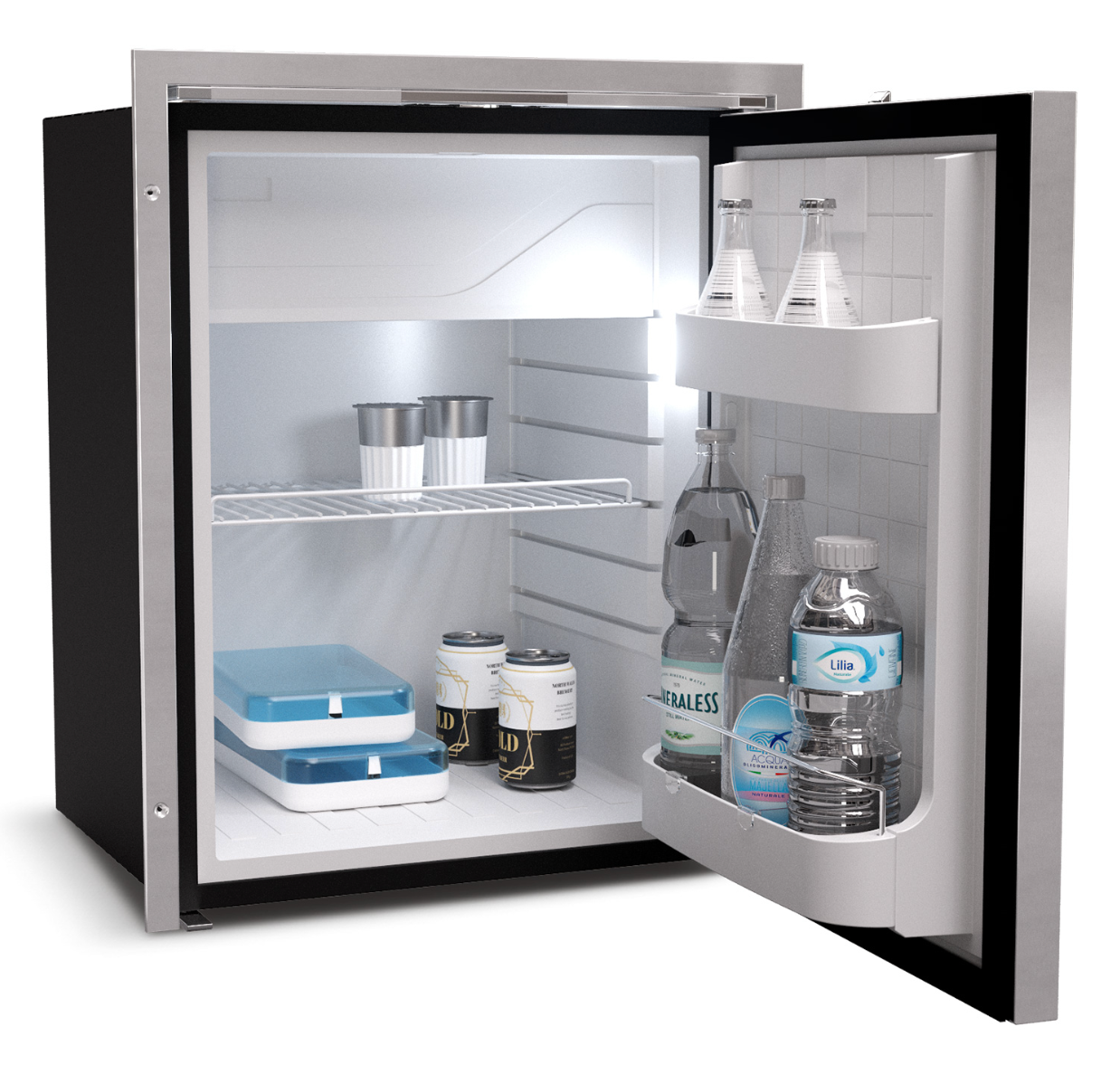
Marine Refrigeration Systems: Which Setup Fits Your Boat?
Most people shopping for marine refrigeration start by looking at fridges. We'd start somewhere else: your power. How you make electricity aboard, and how long you go without shore power, decides which refrigeration system will serve you and which one will flatten your batteries by breakfast.
We design, install and repair marine refrigeration systems out of Miami for cruisers, sportfishers and commercial boats. This is the decision path we walk every customer through. Looking for a specific fridge or freezer cabinet instead? Our marine refrigerator buyer's guide covers cabinets, drawers and sizes.
Start Here: Three Questions That Pick Your System
- How often are you off shore power? Weekends at the dock and weeks at anchor need very different setups.
- How do you charge? Daily engine hours, solar, a generator, or only shore power.
- What are you cooling? A couple's groceries, a charter's provisions, or a fish hold full of catch.

The Five Types of Marine Refrigeration Systems
DC Condensing Unit Systems (12V/24V)
The workhorse of modern yacht refrigeration. A Secop (formerly Danfoss) BD compressor drives an evaporator plate inside an insulated box, drawing roughly 2–4 amp-hours per hour once the box is down to temperature. It runs straight off the house bank, so it works at anchor, underway or plugged in. The Sea Frost BD air-cooled condensing unit is a popular choice for converting an existing icebox, and the higher-capacity Sea Frost BDXP handles larger boxes and freezers.
Choose it if: you anchor out regularly and charge with solar, alternator or both.

Holding Plate Systems
Think of a holding plate as a cold battery. A compressor freezes a eutectic solution inside the plate during an hour or two of engine or generator run time; the plate then keeps the box cold for most of a day with the compressor off. Holding plates shine on boats that run an engine or genset daily and want silent, battery-free cooling the rest of the time.
Choose it if: you run the engine or generator on a predictable schedule.
AC-Powered and Split Systems
Larger yachts that live on a generator or shore power often run 115/230V AC refrigeration, sometimes as split systems with the compressor in the engine room. Efficient and quiet in the cabin, but useless without AC power.
Choose it if: you have a generator running whenever you're away from the dock.

Water-Cooled Systems
Air-cooled condensers struggle in a 110°F Florida engine room. Water-cooled condensers reject heat into seawater instead, keeping efficiency high when the boat is hottest. They add a pump and thru-hull, so plan the plumbing.
Choose it if: your compressor has to live in a hot, closed space.
Commercial Marine Refrigeration: RSW and Bait Freezing
Fishing boats need cold at a different scale. Refrigerated seawater (RSW) systems chill a slurry in the fish hold so the catch drops in temperature fast and holds quality to the dock. The Sea Frost BG water-cooled condensing unit for Cool Fish RSW systems is built for this. For bait, a dedicated Sea Frost Baitfreezer system keeps your best bait frozen solid offshore.
Choose it if: you run a sportfisher, charter or commercial operation where catch quality is money.
Marine Refrigeration System Comparison
| System | Power source | Battery draw | Best for | Watch out for |
|---|---|---|---|---|
| DC condensing unit | 12V/24V house bank | ≈2–4 Ah per hour | Cruisers who anchor out | Needs a healthy bank and charging |
| Holding plate | Engine or generator run time | Near zero between charges | Daily engine or genset users | Skipped run time means a warm box |
| AC / split | Shore power or generator | None (AC loads) | Large yachts with constant AC power | No cooling without AC power |
| Water-cooled | DC or AC | Lower in hot spaces | Hot engine rooms, tropics | Extra pump and thru-hull |
| RSW / bait freezer | AC, usually generator | None (AC loads) | Sportfishing and commercial boats | Larger install, generator capacity |
Sizing: Box, Insulation and Power Budget
A compressor can only remove heat as fast as the box lets it in. Insulation matters more than the brand on the compressor.
- Insulation: aim for 3–4 inches of foam on a fridge and 4–6 inches on a freezer. Adding 2 inches to a thin box can cut energy use by a third or more.
- Power budget: a DC fridge drawing 3 Ah per hour uses about 72 Ah a day. On a 200 Ah AGM bank (about 100 Ah usable) that's most of your margin; on lithium, much less of a worry. Pair the system with enough battery charging to put it back.
- Freezer loads: expect roughly double the draw of a fridge of the same size.
Brands We Install and Stock
- Sea Frost for DC condensing units, holding plates, RSW and bait freezing. Compare it head to head in our Sea Frost vs. Vitrifrigo breakdown.
- Isotherm for drop-in cabinets and conversion kits, like the Isotherm Cruise 90 Big Classic.
- Vitrifrigo for flush-mount stainless cabinets and drawers on finished yachts.

Browse every system and spare in marine refrigeration, or jump straight to marine freezers and marine ice makers.
Marine Refrigeration System FAQs
What is the best marine refrigeration system?
There isn't one best system, only the best match. Cruisers at anchor do best with a DC condensing unit; daily engine users with a holding plate; sportfishers with RSW. Start from your power source.
Can I convert my icebox to refrigeration?
Usually, yes. A DC condensing unit with an evaporator plate turns a well-insulated icebox into a fridge or freezer. Upgrade the insulation first if the walls are thin.

What does commercial marine refrigeration include?
On fishing boats it typically means refrigerated seawater (RSW) fish-hold chilling, bait freezers and blast freezing, usually powered by a generator.
How do I know my system is failing?
Long run times, frost on the plate that won't build, warm spots and rising amp draw are early signs. Our post on 5 signs your marine refrigeration is losing efficiency walks through each, and our 25 common marine refrigeration questions covers the rest.
Get a System Designed for Your Boat
Tell us your boat, your power setup and how you use it, and we'll spec a refrigeration system that fits, then install it. Visit our marine refrigeration service page or call 305-964-8270.